
Project Type
Solo Project
Duration
3 Weeks
Team Size
Solo
Engine
Unreal Engine 5
Genre
Third-person Shooter
Project Focus
Game Design • 3D Art • Level Design • Gameplay Programming
OVERVIEW
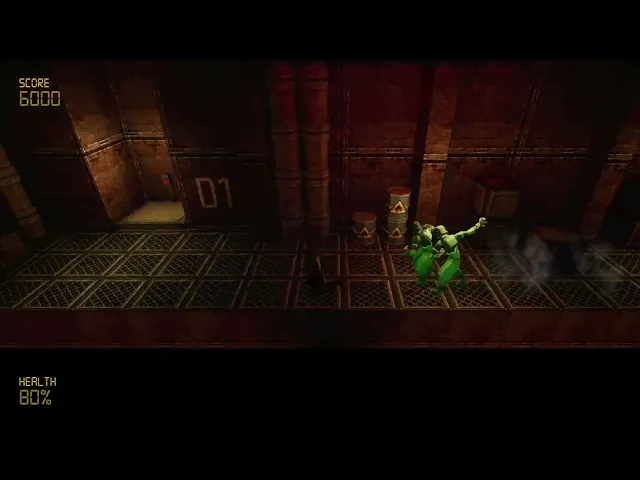
Omega Striker 2 is a 2.5D platform shooter prototype built around fast-paced combat, exploration, and environmental interaction. The player moves through two connected levels, fighting infected enemies, switching between weapons, collecting health and key items, and using environmental systems to progress.
The project was developed as a solo assignment and focused on combining gameplay systems, level progression, UI, materials, and Blueprint implementation into a complete playable experience.
GAMEPLAY VIDEO
CORE GAMEPLAY
The gameplay is built around moving through a linear 2.5D environment while fighting enemies and interacting with the world. Players can shoot, switch weapons, destroy objects, collect pickups, activate buttons, and find keycards to unlock new areas.
2.5D CAMERA SYSTEM
Although the player character is based on Unreal Engine's Third Person Template, the game uses a custom spline-based camera system to create a 2.5D perspective. The camera follows the player along predefined paths while allowing the character to move and jump naturally within the 3D environment.




GAMEPLAY SYSTEMS
The player can switch between multiple weapons with different firing behavior, range, damage, and spread. Shooting is handled through sphere traces, with weapon-specific variables controlling how each weapon behaves.
Visual hit feedback, enemy reactions, and short stun states help make combat readable during faster encounters.
Weapons share a common parent setup containing variables such as fire rate, damage, trace distance, and radius. Individual weapons inherit from this system, allowing their behavior to be adjusted without rebuilding the firing logic for each weapon.
Enemies use a Behavior Tree to detect and pursue the player before attacking at close range. Taking damage provides visual feedback and briefly stuns enemies, while defeating them rewards the player with score.
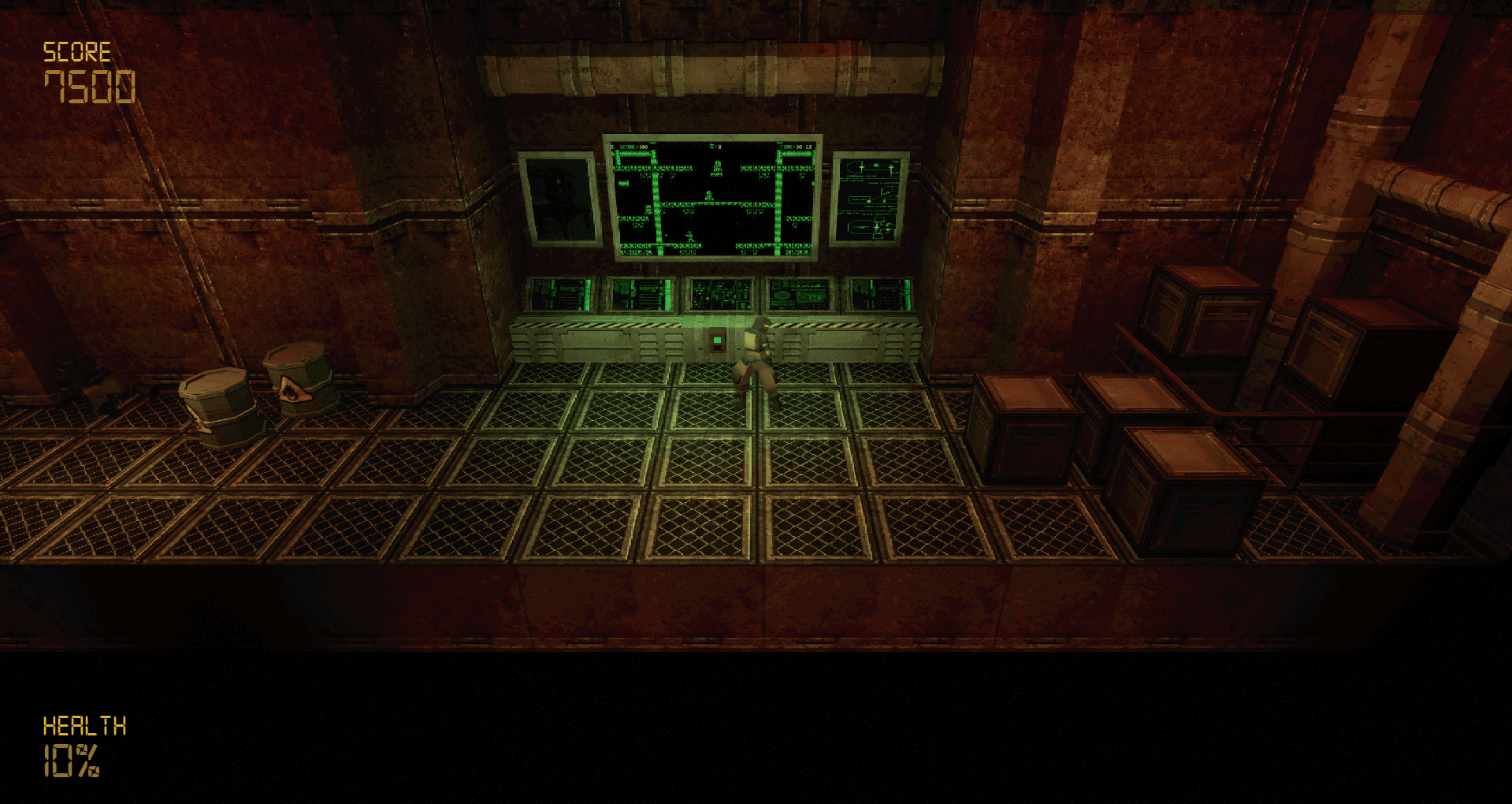
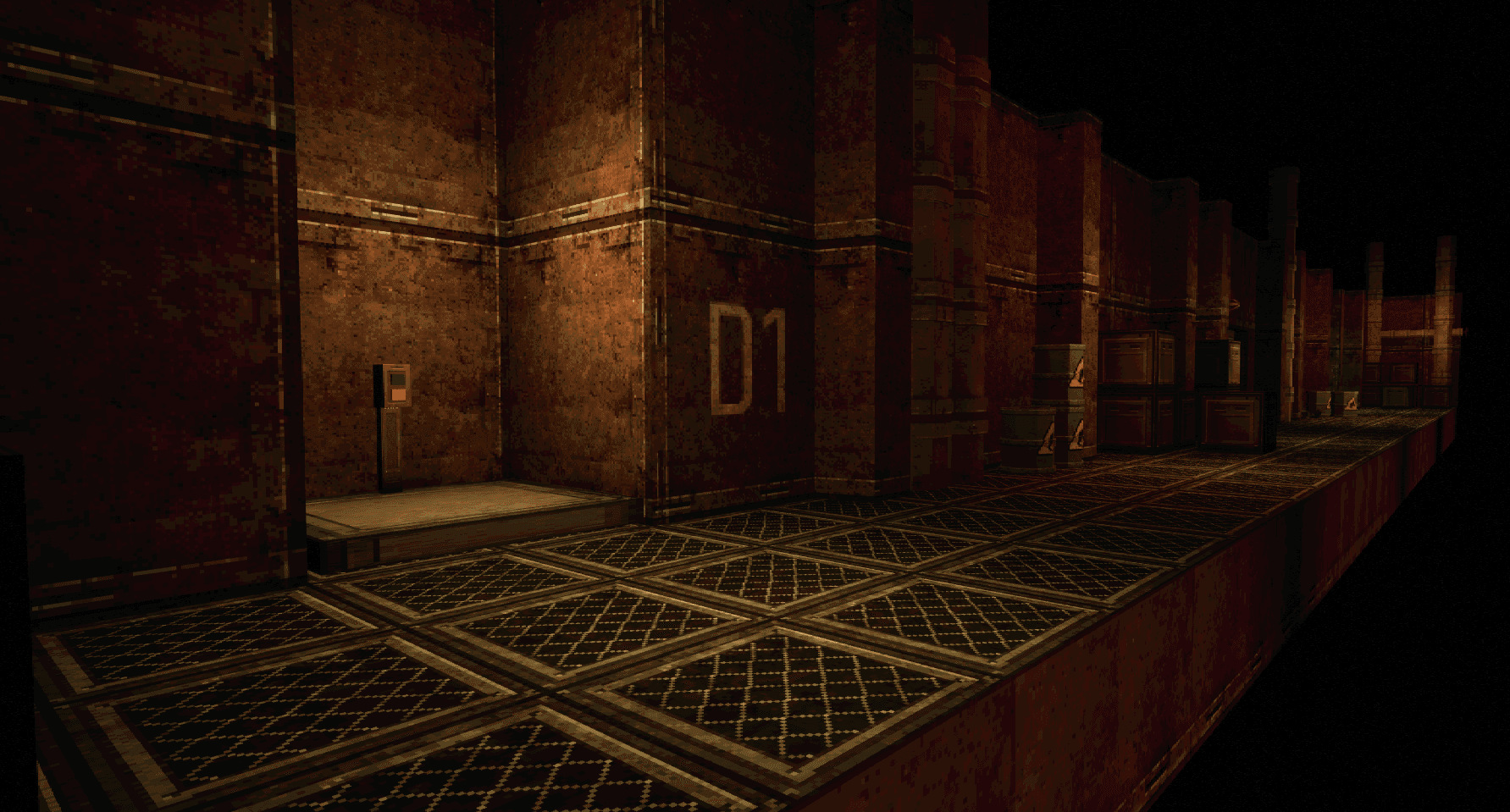
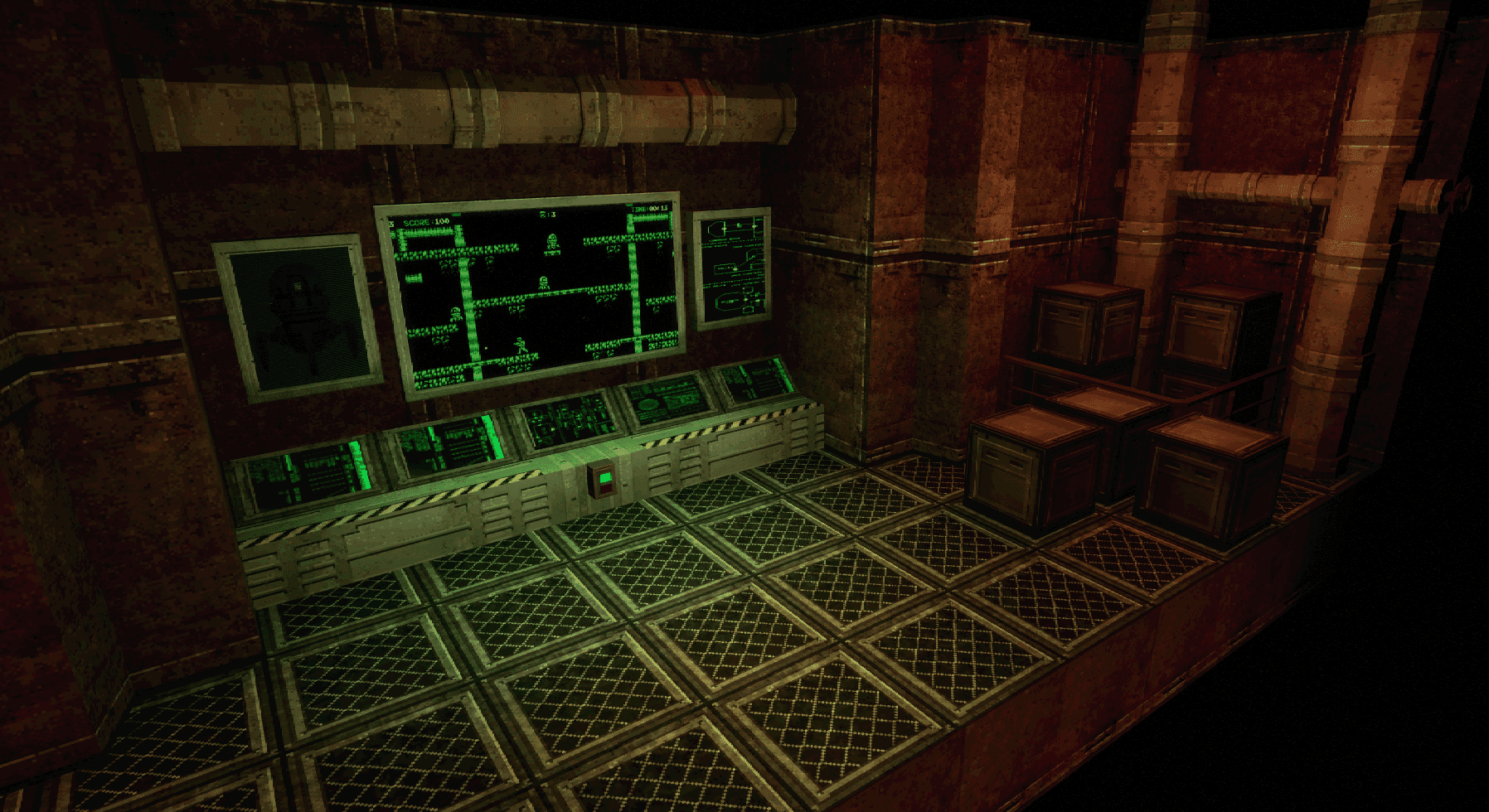
I created the textures and materials used throughout the environment, taking inspiration from the low-resolution textures and visual style of the PlayStation 1 era. I wanted the environments to have a deliberately simple, retro look while still feeling readable and consistent.
I also created an animated water material using vertex movement and built a transparency effect for foreground objects that could otherwise obstruct the player's view.
Additional effects such as enemy hit flashes, weapon impact effects, and glowing toxic waste help communicate gameplay events clearly to the player.
Buttons, doors, breakable crates, explosive barrels, and other objects make the environments interactive. I used Blueprint Interfaces for the interaction system, allowing the same player interaction to work across different objects.
Breakable Crates
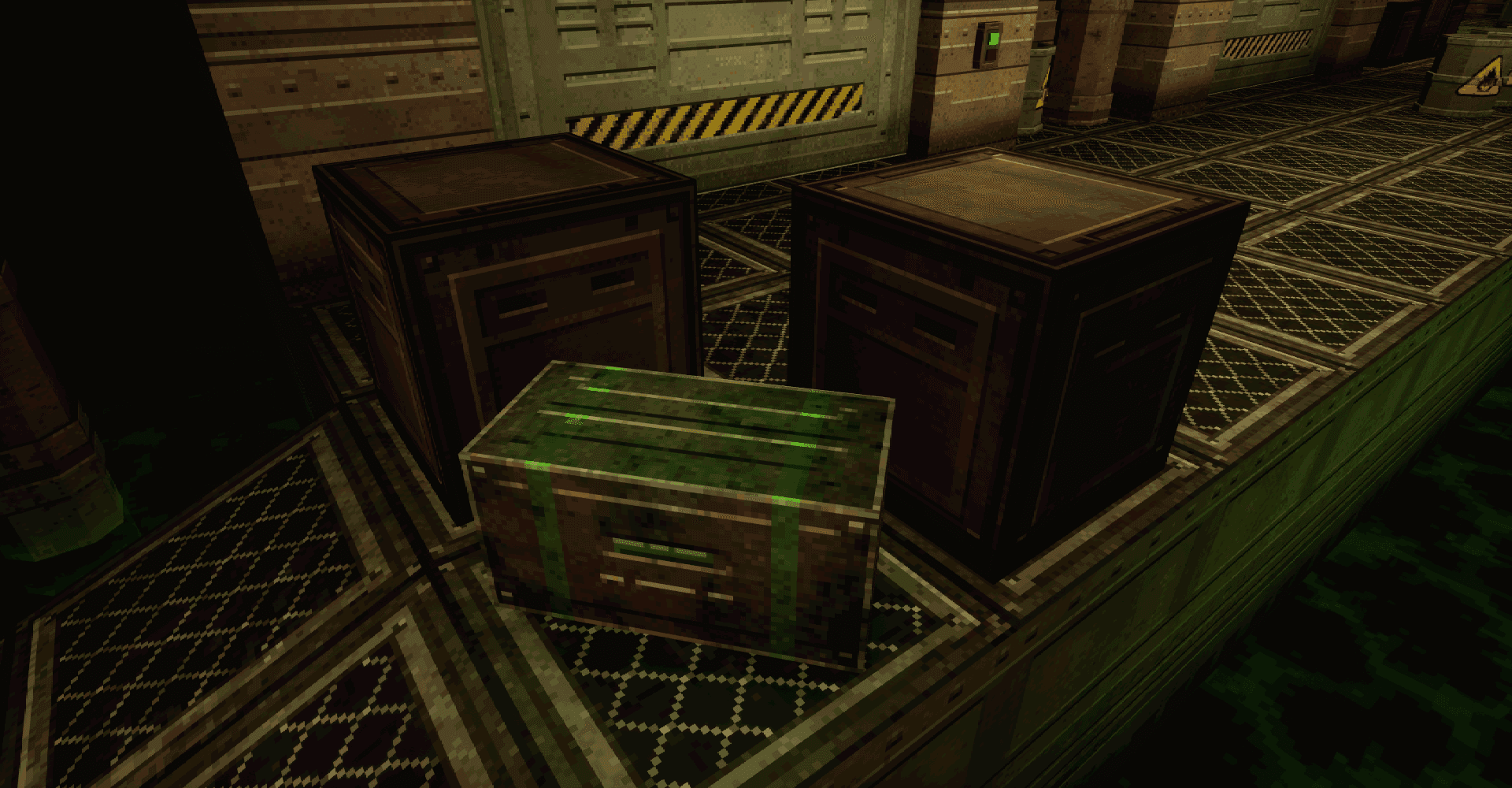
Destroying crates can reveal random pickups such as health and ammo.
Explosive Barrels
Barrels can trigger chain reactions, allowing the environment to be used during combat.
Buttons & Doors

Buttons communicate with specific doors through an interaction interface and matching IDs.
Keycards

Keycards create simple exploration objectives and gate progression through the level.
UI & GAME FLOW
I implemented the UI and overall game flow, including the main menu, HUD, pause menu, mission complete screen, mission failed screen, and replay functionality.
The HUD tracks the player's health and score throughout the game, while the different game states allow the player to complete a mission, fail, restart, pause, or return to the main menu.

BLUEPRINT IMPLEMENTATION
The gameplay was implemented using Unreal Engine Blueprints. This included the weapon system, camera movement, environmental interactions, enemy behavior, pickups, score and health tracking, UI, and overall game-state management.
Rather than building every object as an isolated system, I tried to create reusable logic where possible, such as a shared weapon parent and an interface-based interaction system.
REFLECTION
Omega Striker 2 gave me the opportunity to build a complete playable experience while working with several interconnected systems in Unreal Engine 5.
The project helped me become more comfortable structuring reusable Blueprint systems and connecting gameplay, AI, UI, materials, and level progression into a cohesive game.