THE FACTORY - LEVEL DESIGN
Project Type
School Project
Duration
2 Weeks
Team Size
Solo
Engine
Unreal Engine 5
Genre
Third-person
Project Focus
Level Design • Level Blockout • Environment Art
The Challenge
Design a compact level that teaches navigation and exploration through environmental cues rather than explicit waypoints.
OVERVIEW
The Factor is a short third-person puzzle level created as a two-week solo project in Unreal Engine 5. The goal was to explore player guidance, environmental storytelling, and intuitive level flow through a compact industrial environment where players restore power to unlock the exit.
Design Goals
The goal was to create a compact experience where exploration naturally leads the player through a looping level structure while reinforcing spatial awareness and progression.
Guide players using level layout and environmental cues.
Reward exploration by revealing future objectives.
Reinforce spatial awareness through interconnected spaces.
Level Layout
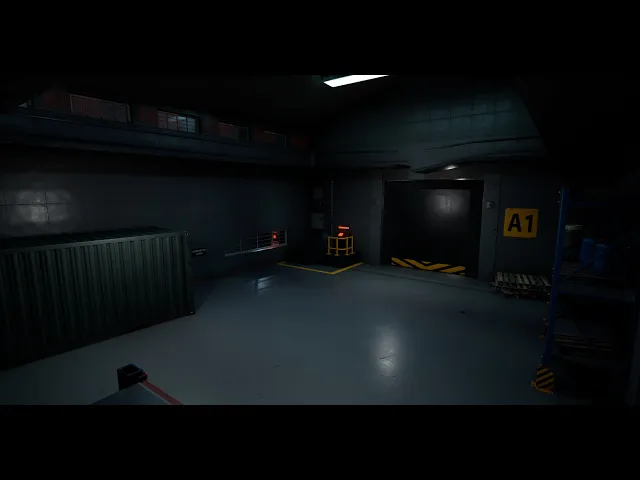
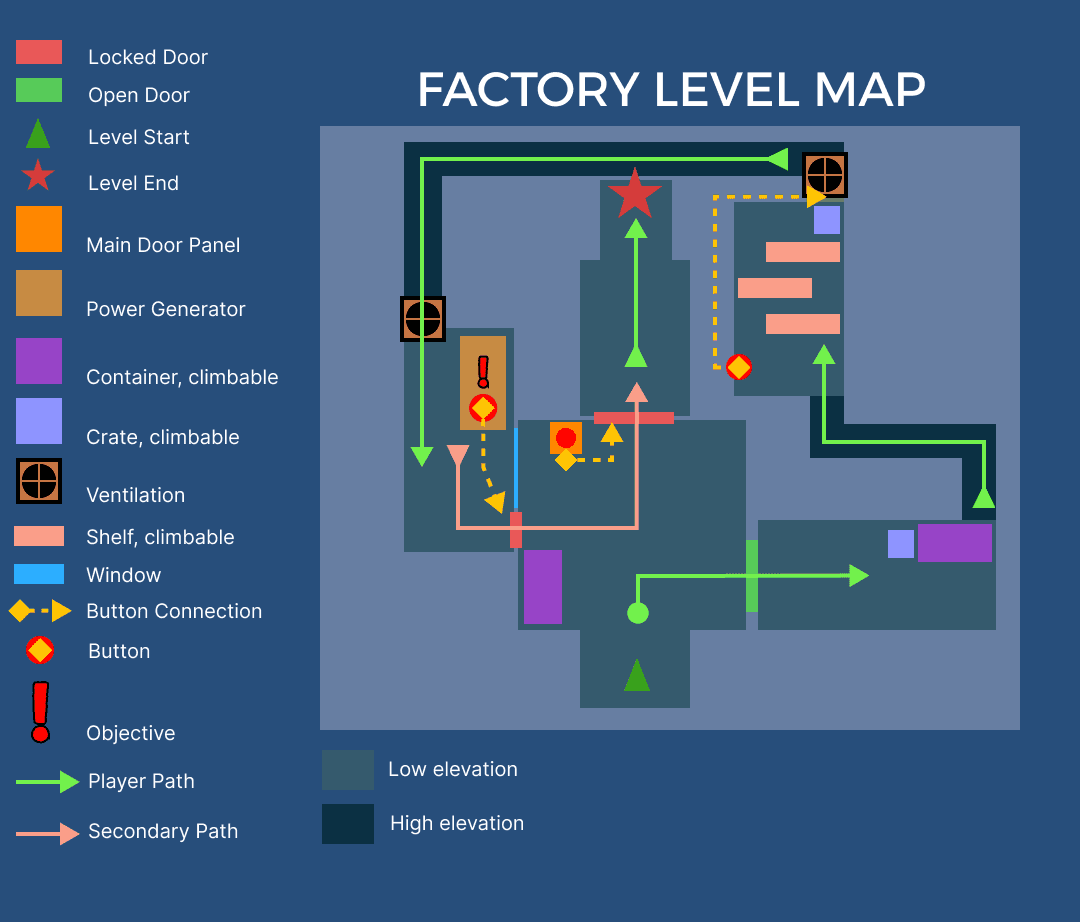
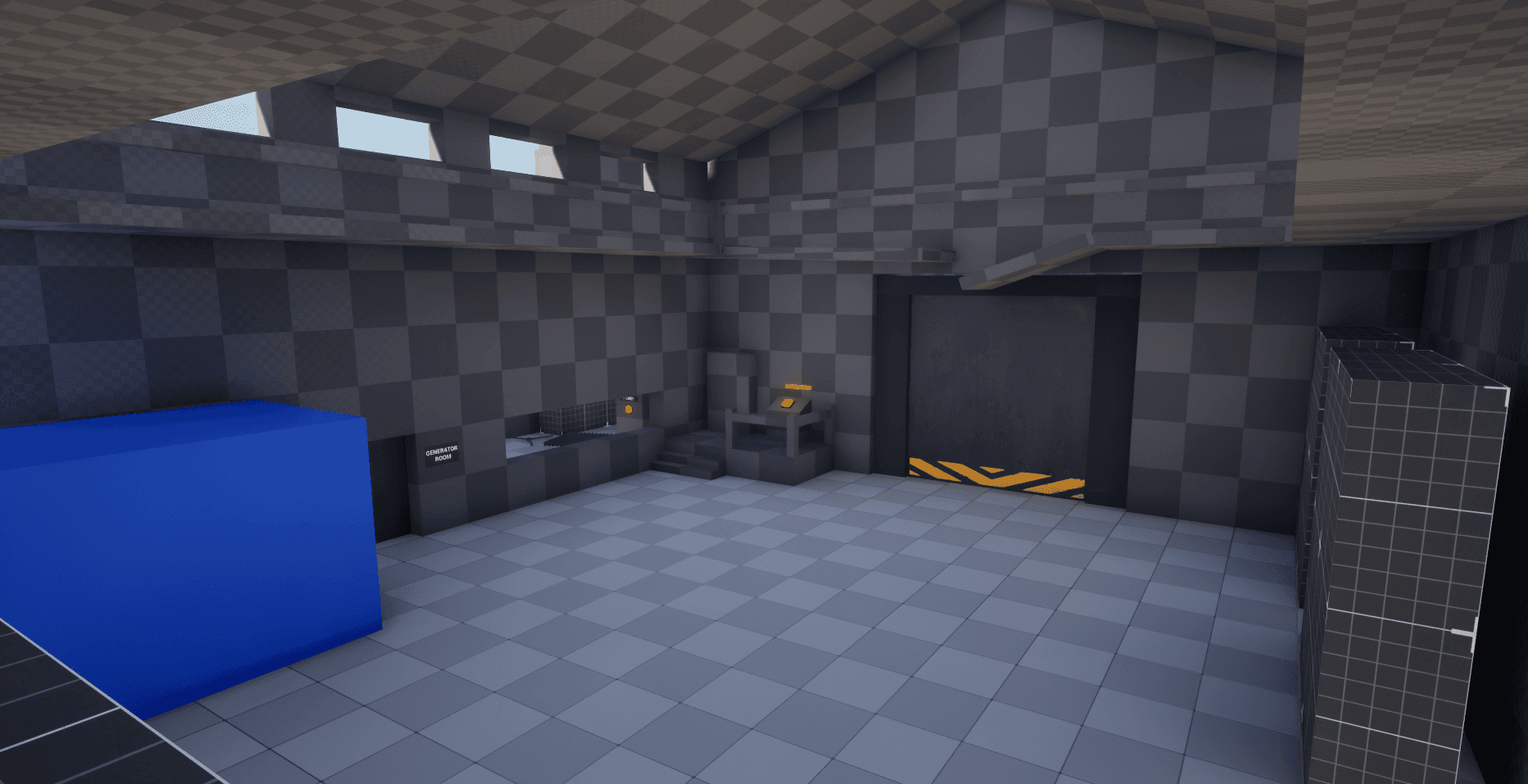
The level is built around a central hub containing a large locked door that immediately establishes the player's objective. Through environmental framing, the player can already see the generator room, encouraging exploration and creating a clear long-term goal.
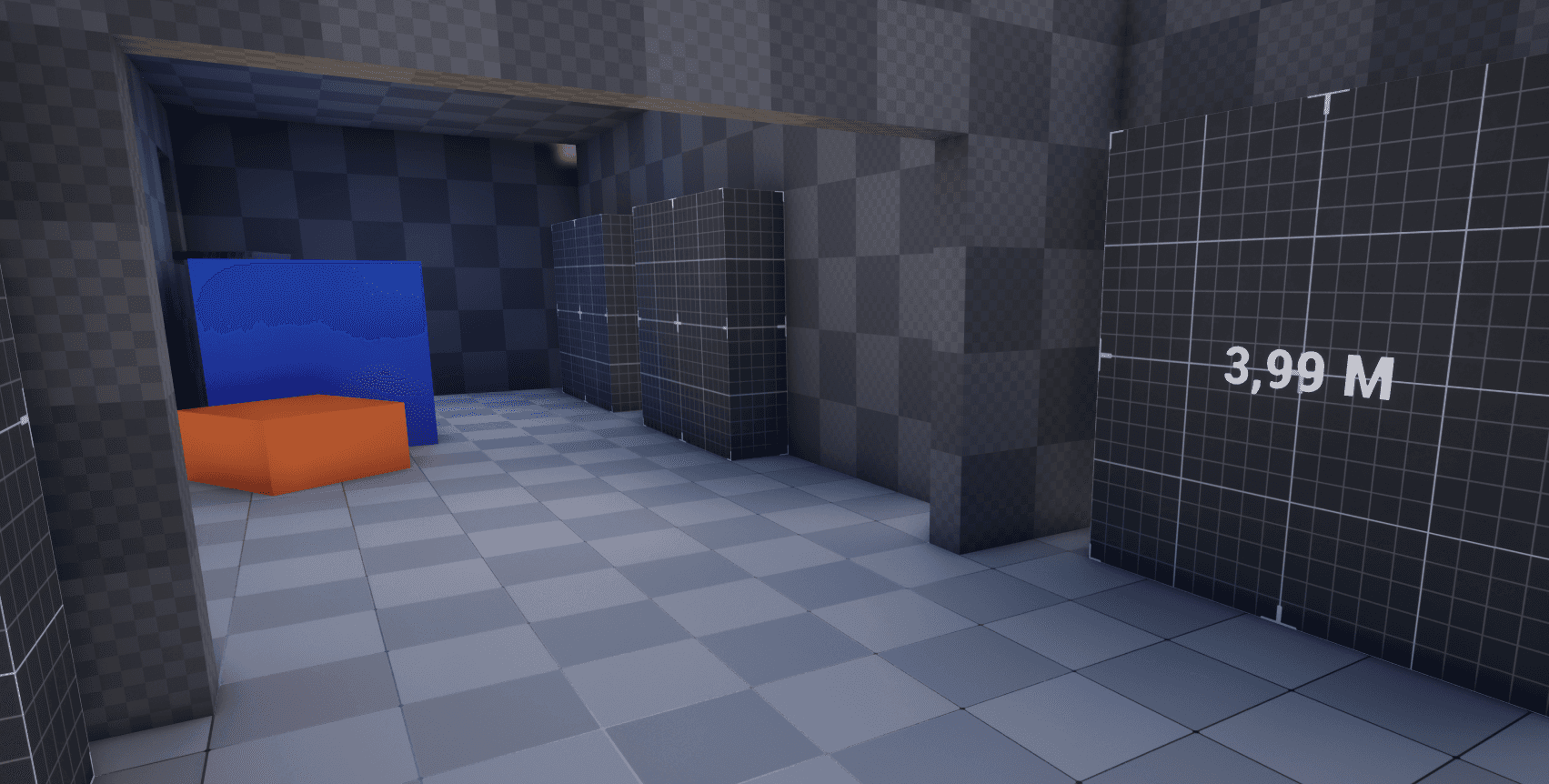
Instead of progressing directly forward, players discover an alternative route through maintenance vents that eventually loops back into the generator room. This structure reduces unnecessary backtracking while creating a satisfying "aha!" moment when players realize how the different areas connect.


Player Guidance
One of the primary design goals was making the level readable without relying on intrusive UI or explicit waypoint markers.
The generator room is visible early in the level through windows and environmental framing, helping players understand their objective before reaching it. Throughout the environment, yellow industrial floor markings are incorporated as part of the warehouse itself, creating a consistent visual language that naturally guides players toward interactable objects and key gameplay elements without breaking immersion.
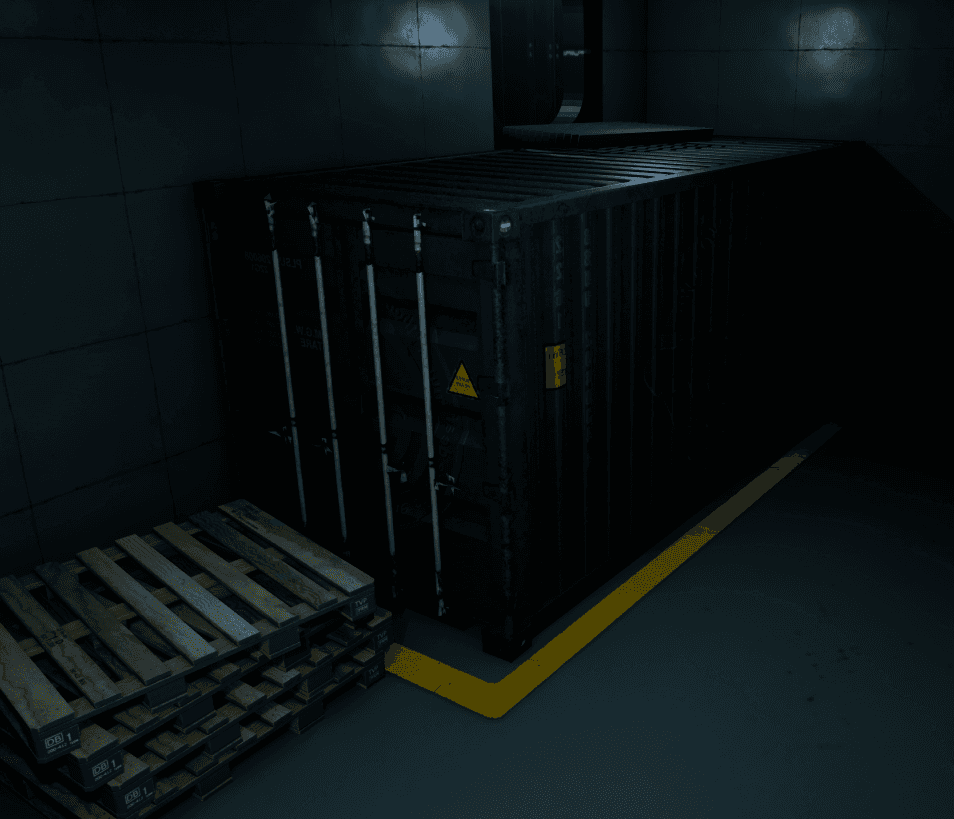
Environmental composition was also used to influence player behavior. For example, containers partially obscure the keycard area, encouraging players to first interact with the locked exit before searching for the missing keycard, resulting in a more satisfying progression.


Playtesting & Iterations
The level was playtested three times with players of different experience levels to evaluate Three rounds of playtesting helped refine the level's pacing and readability. Based on player feedback, exploration paths were expanded, obstacles were simplified and the ending was also redesigned after players felt it concluded too abruptly. Introducing a keycard objective created a stronger sense of progression while rewarding players who had previously explored the level and observed clues through the ventilation system
From Blockout to Final
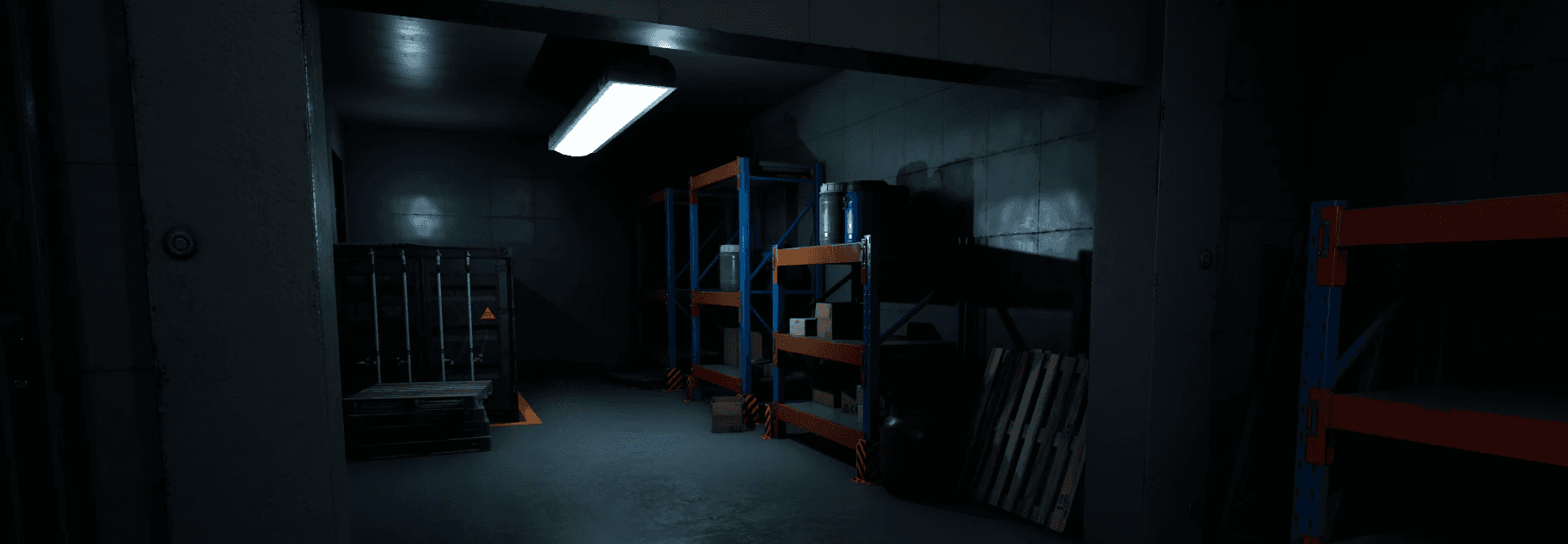
Once the gameplay had been validated through blockouts and playtesting, the level received a complete environment art pass. Materials, lighting, and environmental dressing transformed the greybox into a believable industrial warehouse while preserving the readability established during blockout.



Reflection
This project reinforced the importance of clear player guidance and iterative level design. Small adjustments to layout, environmental cues, and progression significantly improved the overall player experience, highlighting the value of playtesting throughout the design process.
Building a movement "gym" before starting the level also proved valuable, allowing me to validate player movement metrics early and speed up the blockout process.
Key Takeaways
Designed a complete level from blockout to final art pass.
Focused on readable layouts and environmental player guidance.
Iterated through multiple playtests to improve pacing and navigation.
Balanced gameplay, visual design, and player experience.